
The MAX Group believes that by respecting people, the development of people will result in growth for the company. Since our founding, respect for people has been the guiding spirit. Recognizing that human rights, the universal birthrights of all human beings that are essential capital for the Company’s sustainable growth, must never be jeopardized.
We have therefore formulated the MAX Group Human Rights Policy. On the basis of this policy, we carry out business activities that respect human rights and strive to become a company trusted by society.
Human Rights
Respect for Human Rights
MAX Group Human Rights Policy
The MAX Group ("MAX") believes that by respecting people, the development of people will result in growth for the company. Since our founding, respect for people has been the guiding spirit. Recognizing that human rights, the universal birthrights of all human beings that are essential capital for the Companyʼs sustainable growth, must never be jeopardized, we hereby establish the MAX Group Human Rights Policy.
Basic concept
MAX recognizes that its own business activities could potentially have or actually have had an impact on human rights. On the basis of this understanding, MAX will take the utmost care not to infringe on the human rights of anyone involved in its business activities. MAX will continue to scrutinize the United Nations International Bill of Human Rights, including the Universal Declaration of Human Rights, and other internationally recognized human rights norms such as the Guiding Principles on Business and Human Rights, as we address human rights issues.
This policy is designed to ensure that MAX respects human rights and complies with local laws in the countries and regions where it operates. In the unlikely event that a countryʼs laws and regulations differ from international human rights norms, we will follow the higher standard. In any conflict, we will seek ways to maximize respect for internationally recognized human rights.
Scope
This policy applies to all officers and employees of MAX.
We also expect our suppliers, business partners, and all other associates of MAX to understand and comply with this policy.
Human rights due diligence
MAX is committed to identifying, preventing, and mitigating negative impacts on human rights to fulfill our responsibility to respect human rights.
Corrective and remedial measures
If it becomes clear that MAXʼs business activities have caused, facilitated, or contributed to a negative impact on human rights, we will take appropriate measures to correct the situation. In addition, we will continue to expand our consultation desk and develop effective remedial mechanisms.
Education and engagement to promote respect for human rights
MAX will work to ensure that this policy is communicated both internally and externally.
We will provide appropriate training and skills development to all officers and employees while engaging in dialogue and consultation with external stakeholders.
Disclosure
MAX will continuously monitor compliance with this policy and make improvements as necessary. Using the MAX website and other channels, we will appropriately disclose information about our commitment to respect human rights.
Stance on specific issues related to respect for human rights
・Prohibition of discrimination and respect for diversity
MAX respects diverse individuality and will never engage in unfair discrimination for any reason, including nationality, race, ethnicity, gender, religion, age, educational background, thoughts, beliefs, social status, illnesses, disabilities, physical characteristics, social vulnerabilities, sexual orientation, gender identity, marital status, and presence or absence of children.
In hiring activities, we respect and protect the human rights of applicants and conduct fair selection based on suitability and ability. We do not violate the human rights of foreign national employees by treating them unfairly because of their nationality. We encourage all our employees to take the lead in working toward their own growth. We believe that growth depends on respecting a variety of people and personalities, and engaging in friendly competition with each other.
・Prohibition of harassment
MAX does not tolerate any form of harassment, including sexual harassment, power harassment, maternity harassment, peer pressure, or any other behavior that offends personal dignity.
One quality of our ideal personnel is "people who trust others and are trusted by others; people who are worthy of trust." We use that definition as an evaluation factor and, since our founding, have endeavored to realize the guiding spirit of respect for people.
・Prohibition of forced labor and child labor
MAX does not tolerate forced labor, child labor, or other unfair labor practices.
・Providing a rewarding work environment
MAX complies with labor laws and other laws and regulations, manages its working hours properly, guarantees minimum wages, and provides a safe and healthy work environment. We aim to ensure that employees can work in a lively and fun atmosphere, as stated in the MAX Fundamental Management Policy.
・Respect for freedom of association and the right to collective bargaining
MAX respects the fundamental rights of our employees to freedom of association, the right to collective bargaining, and the right to collective action.
Initiatives to Prevent Harassment
"MAX Group Employee Code of Conduct" states the following: "We will not engage in sexual harassment, power harassment, or any form of harassment that violates the character or dignity of a person." MAX also holds compliance study sessions on themes such as harassment.
Promotion of Occupational Safety and Health
We promote occupational safety and health in accordance with laws, regulations, and the MAX Group Safety and Health Basic Policy.
The Safety and Health Committee at each factory promotes initiatives based on an annual plan for the continuous improvement of occupational safety and health. Furthermore, 5S study sessions are held once every three months. As part of the meetings, patrols and checks for dangerous areas are conducted.
In the event of an occupational accident, MAX shares information with all factories and implements improvement measures to prevent reoccurrences.
MAX Group Safety and Health Basic Policy
The MAX Group believes that by respecting people, the development of people will result in growth for the company. Since our founding, respect for people has been the guiding spirit. The safety and health of employees is an essential element for the realization of respect for people. We also believe that measures to ensure the safety and health of employees will lead to coexistence and mutual benefit with stakeholders and local communities.
1. Ensuring the safety and health of employees
(1) We will strive to prevent all kinds of accidents and disasters with the safety and health of employees given the highest priority.
(2) We will create workplaces that provide a safe environment for operations and healthy workplace environments so that employees can work vigorously and safely.
2. Having all employees participate in safety and health activities
(1) In accordance with the spirit of “management in which all employees participate” under the MAX Fundamental Management Policy, all employees will take the initiative in safety and health activities.
(2) We will cultivate a corporate culture in which every employee can proactively suggest improvements for safety and health.
3. Creating a safety and health structure and investing management resources
(1) We will comply with both the letter and spirit of all laws, regulations, and standards related to occupational safety and health.
(2) We will compile internal guidelines (including manuals) related to occupational safety, ensure that they are followed, and review them as appropriate.
(3) We will create a safety and health management structure with a clear role, authority, and responsibility.
(4) We will invest appropriately in human, technological, and financial resources to create workplaces in which employees can work vigorously and safely.
4. Risk assessment and continuous improvement
(1) We will regularly evaluate and consider appropriate countermeasures for potential risks that exist in working environments and operational processes.
(2) We will introduce and continuously improve a PDCA (Plan, Do, Check, Act) cycle for safety and health management.
5. Enhancing employees' awareness and capabilities toward safety and health
(1) We will provide safety and health training for all employees.
(2) Through safety and health training, we will develop human resources responsible for creating workplaces in which employees can work vigorously and safely and improving safety and health continuously.
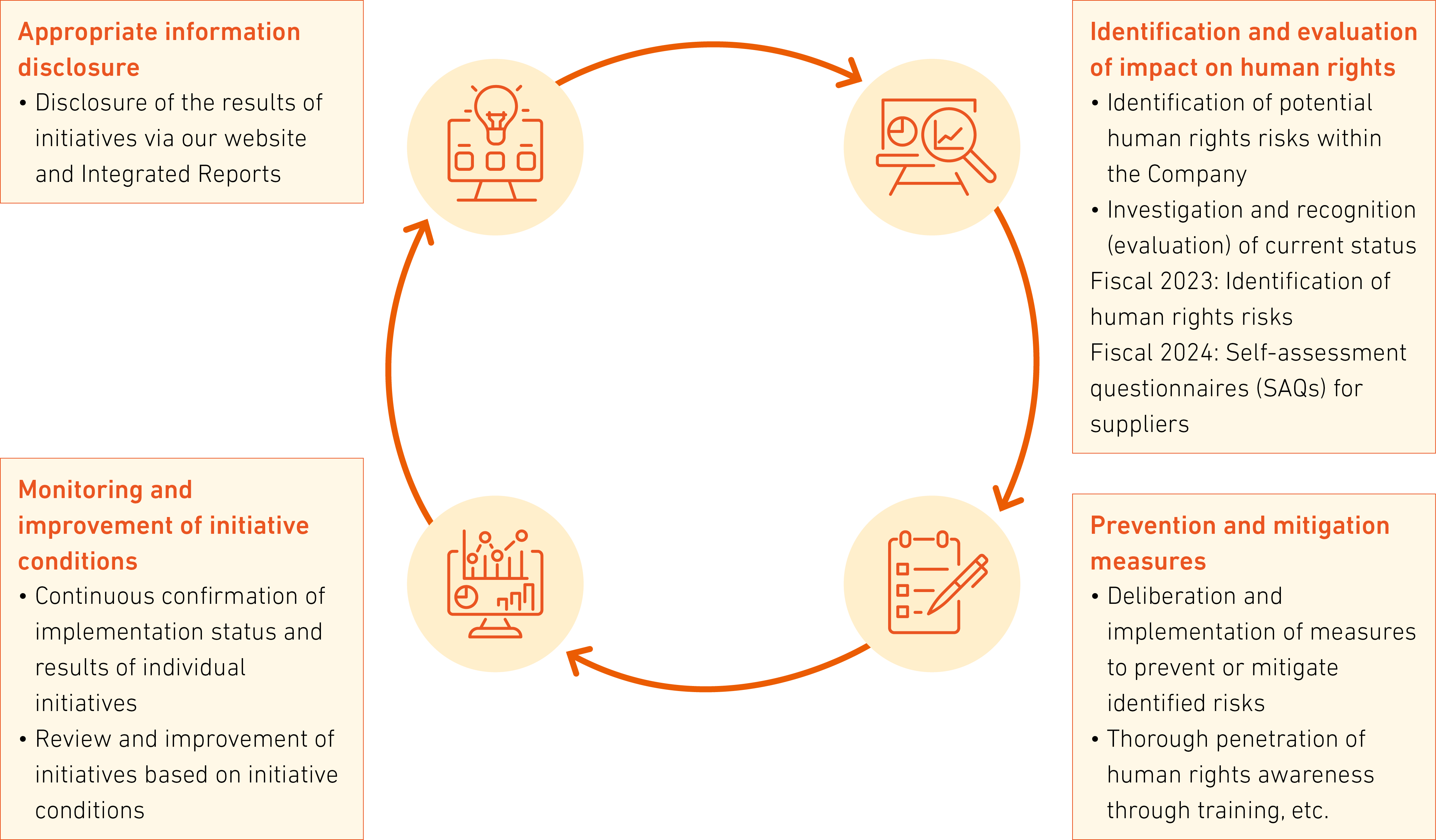
Human rights due diligence
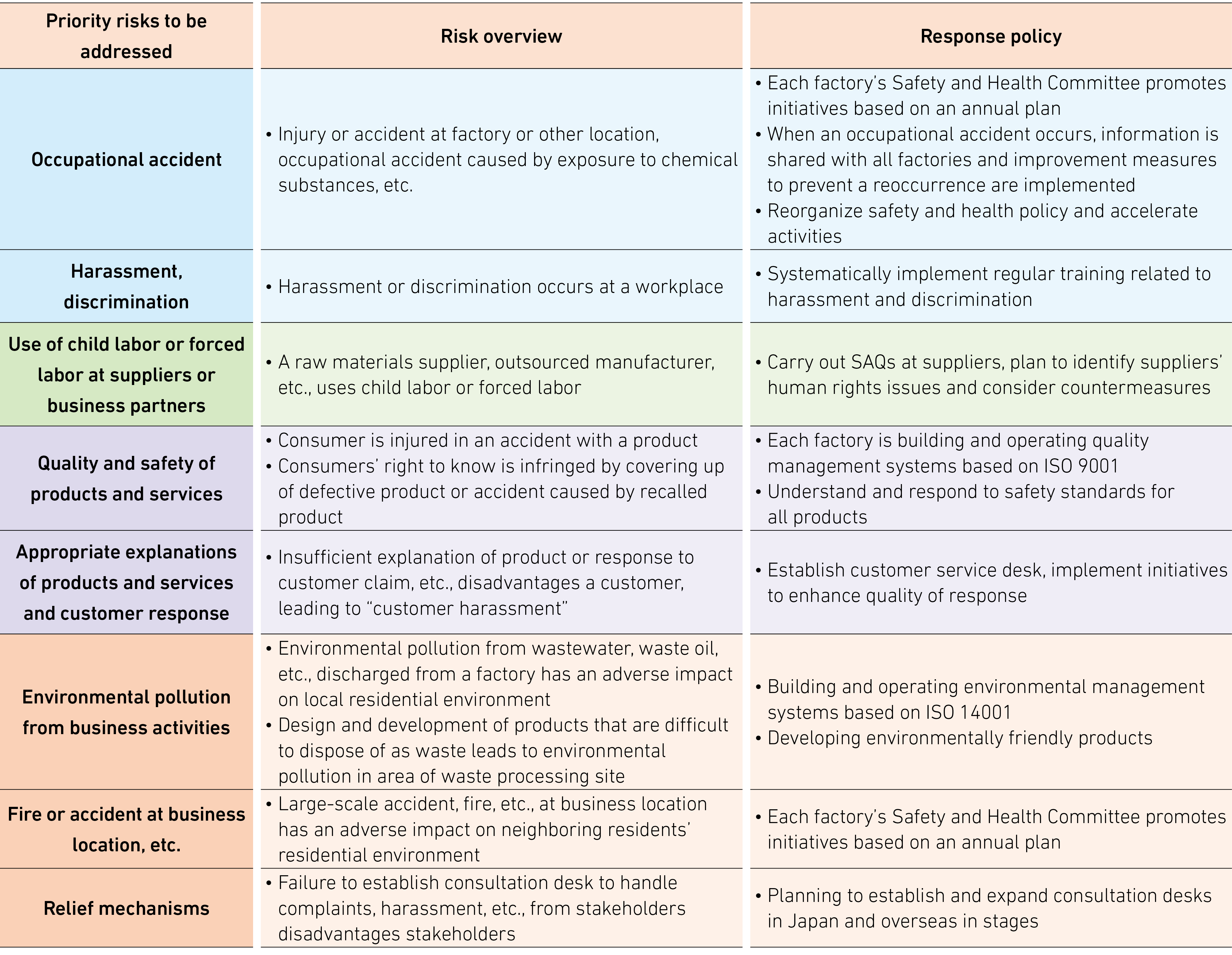
To fulfill our responsibility to respect human rights, the MAX Group is building and implementing a human rights due diligence framework to identify, prevent, and mitigate negative impacts on human rights. In fiscal 2023, the Group identified human rights risks it should prioritize its efforts to address and defined a policy for dealing with these priority risks. In fiscal 2024, selfassessment questionnaires (SAQs) were administered to suppliers to determine the state of human rights risks in the supply chain, including the use of child labor and forced labor throughout the supply chain, which was one of the risks identified as a priority risk.
Human rights risk identification process
STEP1
Organizing human rights issues
Human rights issues related to MAX's supply chains are organized.
Reference
United Nations' "Guiding Principles on Business and Human Rights" and "Universal Declaration of Human Rights," "OECD Guidelines for Multinational Enterprises," ILO's "International Labour Standards," SA8000, METI's "Guidelines on Respecting Human Rights in Responsible Supply Chains," practical reference materials, etc.
STEP2
Evaluating human rights issues
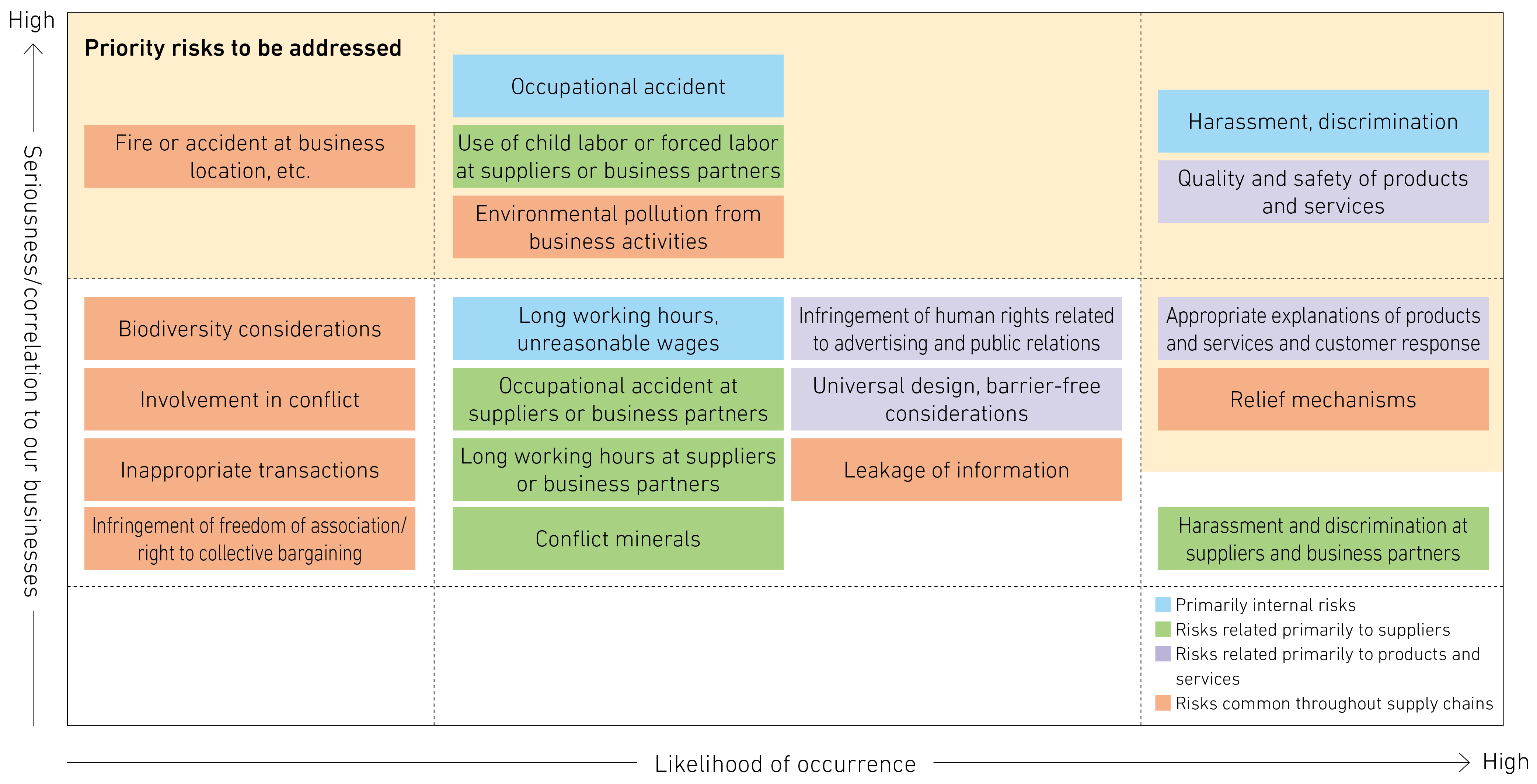
The seriousness, correlation to our businesses, and likelihood of occurrence are evaluated based on the results of the following surveys.
- Surveys and interviews with business divisions related to awareness of human rights risks
- Desktop survey results from nonprofit organizations' and nongovernmental organizations' statements and requests, etc.
- Risks deemed important by industry peers and global companies in Japan
- Various guidelines and media reports related to human rights
- Results of reviews by human rights specialists
STEP3
Deliberation by Sustainability Promotion Committee
Results of Steps 1 and 2 are compiled, discussed three times by the Sustainability Promotion Committee, and priority human rights risks to be addressed are proposed.
STEP4
Designation of priority risks to be addressed
Periodic reports are made to the Board of Directors, which makes the final decision on the priority risks to be addressed.
Human rights risk map
Initiatives in response to priority risks to be addressed
Human Rights Due Diligence Operational Cycle
Identification of suppliers' human rights issues and consideration of countermeasures
Overview of SAQs
| Study scope | Suppliers in Japan and overseas |
| Implementation period | August to October 2024 |
| Questionnaire items | ・CSR and governance,etc. ・Human rights ・Labor ・Environment ・Fair business practices ・Quality and safety ・Information security ・Supply chain management |
| Response rate | 83% |
Overview of results
Percentage of results that were positive (positive responses such as responses that initiatives were already being implemented, or that issues are outside of scope)
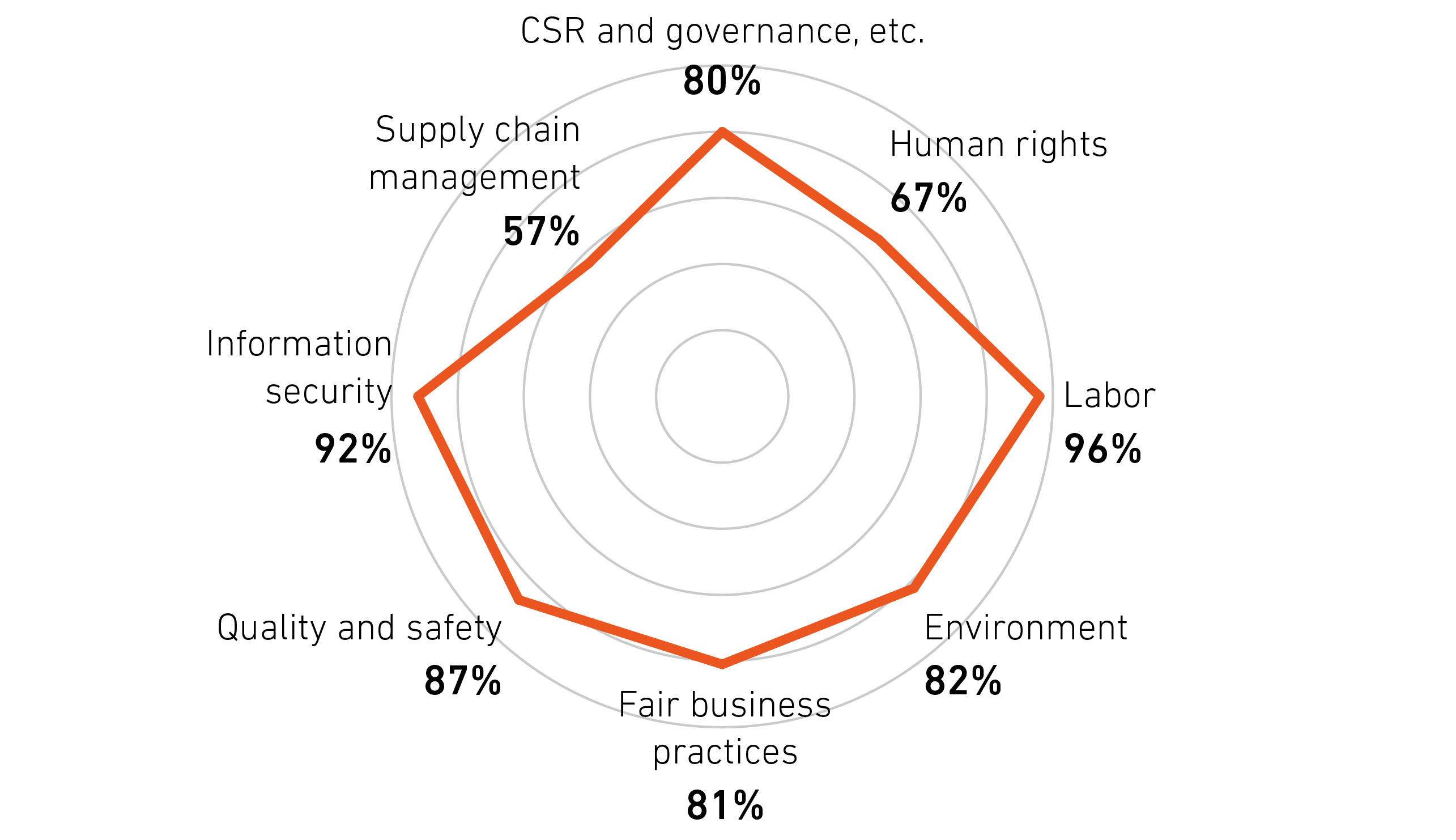
Overall evaluation
The questionnaires found no major risks that needed to be dealt with urgently. Through the questionnaires, we determined that supplier initiatives had made an especially great deal of progress in the areas of labor and information security. However, the percentage of positive responses was relatively low for the areas of human rights and the supply chain. Specifically, in the human rights area, initiatives tended to be somewhat lacking with respect to human rights due diligence, while in the supply chain area, they tended to be slightly lacking with respect to formulating business continuity plans (BCPs), etc. Also, we determined that some suppliers had made little progress with initiatives for tier 2 suppliers and beyond. Although there were no risks or concerns of suppliers being directly involved in forced labor or child labor, we may not be fully aware of risks or concerns related to tier 2 suppliers and beyond.
Initiatives going forward
In fiscal 2025, we plan to conduct human rights training for suppliers to improve their basic knowledge regarding human rights.By increasing supplier awareness of human rights issues, we will help promote supplier initiatives and strive to reduce human rights risks throughout the supply chain, including tier 2 suppliers.